Who is Cesar Millan and why is he famous? The Dog Whisperer who took over TV
9 min read
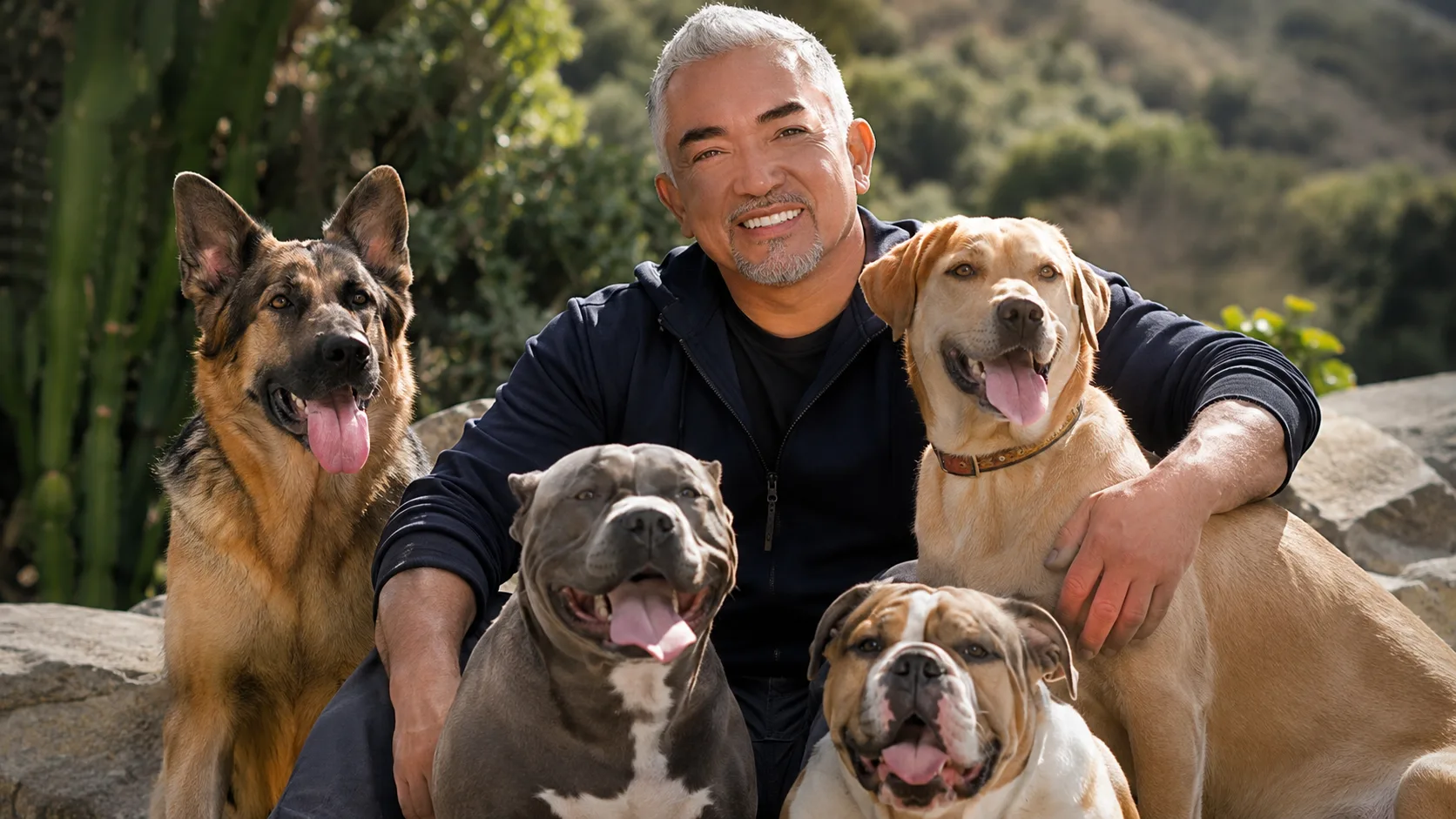
If you have ever seen a man walking several dogs off-leash, talking about “calm assertive energy,” and turning a household meltdown around in a few minutes of television, you already know the image of Cesar Millan. For years he was the global face of on-screen dog training: the Dog Whisperer who took over TV and turned pet behavior into worldwide entertainment.
This guide clearly answers who Cesar Millan is, why he is famous, what his method claims, and what is worth taking—or leaving—if you want real help for your dog. It is not a fan biography or a pile-on: it is context for pet parents who want to decide with judgment.
Who Cesar Millan is
Cesar Millan was born in Culiacán, Sinaloa (Mexico), and emigrated to the United States as a young man. He started working with dogs in California—walking, care, observation—until he built a reputation as someone who could read body language and step into homes where the human–dog bond had broken down.
He did not present himself as a clinical ethologist or a veterinary behaviorist. His brand was that of a rehabilitator and communicator: someone who speaks to the public in simple metaphors (pack, leadership, balance) and shows results on camera. That mix of personal story, charisma, and television launched him far beyond the neighborhood.
- Background: Mexico; public career built in the United States.
- Media role: popular trainer / rehabilitator, not an ethology university title.
- Core promise: restore “balance” between human and dog with exercise, discipline, and affection.
Why he became famous: Dog Whisperer
Mass fame arrived with the reality show Dog Whisperer. The format was addictive: an overwhelmed home, an “impossible” dog, a Cesar visit, and a transformation told in under an hour. Millions of viewers linked his name with “the guy who fixes dogs.”
Television amplified three things at once: families’ emotional urgency, the visual clarity of the interventions, and the idea of an expert who can “read” the animal better than the guardian. That does not only sell episodes; it sells books, tours, training centers, and a personal brand recognized across the Spanish- and English-speaking world.
What made him so media-ready
- Strong human stories: guilt, fear, shame, and relief in one episode.
- Memorable language: pack leader, calm-assertive, exercise–discipline–affection.
- On-screen results that look immediate (even when real life takes longer).
- A Latino presence in U.S. TV—identification and curiosity at once.
What his method claims (in his words)
Millan sums up canine wellbeing in a much-repeated formula: exercise, discipline, and affection, in that order. He argues many problems start when humans give affection without rules or energy outlets, or when they project nerves the dog mirrors.
He talks about being a calm, assertive pack leader: no yelling, no begging, no letting the dog “run” doorways, walks, or sofas. In demos he uses leash handling, light-to-moderate physical corrections, movement blocks, and a sharp read of the animal’s emotional state.
- Exercise: burn energy before asking for calm at home.
- Discipline: clear rules for space, walks, and limits.
- Affection: warmth and reinforcement once the dog is in a balanced state.
For many guardians, that narrative was the first time someone said: “you are part of the problem too.” That message—human responsibility—still helps even when the rest of the method is debated.
The other side: critiques from ethology and welfare
Fame brought scrutiny. Parts of the modern ethology and training community question the dominance frame applied to companion dogs, the use of aversive corrections, and the “cure” pace TV demands. An episode compresses weeks of work; viewers may believe intensity and confrontation are the shortcut.
Common critiques do not deny Millan has helped desperate families. They flag risks: increasing fear or aggression if a correction is misread, prioritizing control over emotional welfare, and generalizing intense rehab to dogs that need veterinary assessment, anxiety management, or well-designed positive reinforcement.
- What is questioned: pack/dominance theory as the only explanation.
- What worries people: techniques that can intimidate or escalate tension if copied blindly.
- What is asked today: individualized plans, evidence, safety, and long-term work with the guardian.
Millan has also softened some messaging over time and stressed that TV is not a full process. As a viewer, the practical rule is: entertainment ≠ clinical protocol.
What you can still use if you watched the show
You do not need to idolize or cancel him to learn. Several ideas in his discourse fit any serious canine education approach:
- The guardian’s emotional state matters: an anxious human shapes the walk.
- Dogs need a tired body and a busy mind; the sofa alone does not train.
- Inconsistent rules confuse more than a clear, kind boundary.
- “Only love” does not fix fear or frustration in an overloaded animal.
Be careful copying TV corrections with a dog that growls, withdraws, or has already shown aggression. Prioritize professional assessment—vet and, if needed, an ethologist or positive-reinforcement trainer—before improvising “pack leader.”
Cesar Millan today: brand, books, and cultural legacy
Beyond one reality show, Millan built a global brand: books, later series, appearances, centers, and a discourse that still spreads whenever someone shares a “Dog Whisperer tip.” In Latin America his name remains popular shorthand for dog training, even though local professional options are much broader.
His cultural legacy cuts both ways. He put dog behavior on the family table and normalized asking for help. He also fixed in the collective imagination an intense intervention style that does not always match what animal-welfare science recommends in 2026. Understanding both sides is exactly why he remains famous—and debated.
FAQ
Is Cesar Millan an ethologist?
Not in the usual academic or clinical sense. He is a trainer and communicator known for canine rehab on media. For a complex behavior diagnosis, seek a behavior professional or clinical ethologist plus veterinary support; TV does not replace that evaluation.
Why is he called the Dog Whisperer?
From the title of his reality show. The nickname captures the idea of someone who “gets” and transforms canine behavior on camera, and it stuck to his personal brand.
Is his dominance method still current?
The idea that you must “dominate” a pet dog like a wolf pack is heavily questioned in applied companion-dog ethology. Today the priority is safety, reinforcing what you want, managing the environment, and emotional health. Some pieces of his message (exercise, consistency, a calm guardian) age better than a rigid hierarchy frame.
Can I train my dog only by watching his videos?
They can inspire habits and motivation, but they do not replace a tailored plan. Every dog has a different history, health, and threshold. With fear or aggression, do not copy episode corrections: get help from a professional who sees your case.
In short
Cesar Millan is famous because he turned canine rehabilitation into mass TV: charisma, a migrant story, a global reality show, and an easy-to-remember method. That is why millions know him as the Dog Whisperer.
For daily life, keep what transfers—calm, exercise, clear rules, human responsibility—and stay critical of what is spectacle. If your dog’s problem is heavy, combine solid education with a welfare lens: that is where fame ends and good work begins.